
Developing tomorrow’s flexible electronics
The evolution of electronic systems is at an inflection point as rigid, planar assemblies give way to flexible and conformal architectures that enable new classes of applications. Today, the reliance on rigid materials in traditional electronics is a limiting factor in product design. Fixed circuit boards are prone to mechanical failures under stress or vibration, and many systems became larger and heavier as more functionality was integrated. These form factors are also difficult to deploy on textiles, wearables, and curved or irregular surfaces.
Over the past several decades, aggressive miniaturization has shrunk components to sub‑millimeter scales while driving exponential growth in processing capability and energy efficiency. Modern sensors routinely integrate multi‑axis measurement, on‑chip digital signal processing, and even embedded AI/ML in compact, low‑power packages. In automotive systems, a typical modern vehicle now incorporates on the order of 60–100+ sensors to monitor everything from engine performance to real‑time tire pressure and advanced driver‑assistance functions. In consumer devices, tiny sensors in smartphones track temperature and humidity, while miniaturized air‑quality and biochemical sensors can be worn for personal health or embedded in smart‑home and building‑monitoring systems.
Flexible Electronics Expanding in Multiple Sectors
As sensing and compute migrate to the edge, analysts expect flexible and conformal electronics to be one of the fastest‑growing segments in the electronics value chain. Various market studies forecast the global flexible electronics market expanding at roughly high single‑ to low double‑digit CAGR through 2032, reaching on the order of tens of billions of dollars from a base in the mid‑20s to low‑30s billions in the early 2020s. [1] Within this market, consumer, automotive, and medical‑device ecosystems are expected to drive strong demand [2]. Flexible platforms today span consumer wearables, 24/7 medical sensors and diagnostics (for example, continuous glucose monitors), industrial and IoT monitoring, and advanced semiconductor packaging and interconnects.

Source: Istock
Sunray Scientific Platform is Unique
Against this backdrop of growing demand for flexible, reliable, and manufacturable electronics, Sunray Scientific provides the interconnect and materials technology needed to make these new architectures practical at scale.
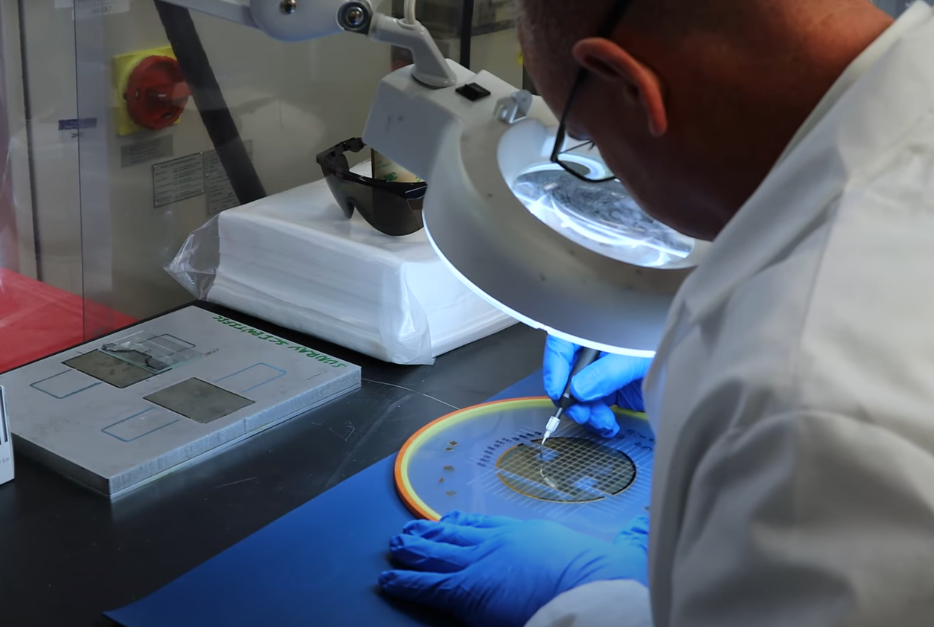
Sunray Scientific’s core technology positions the company as an enabling layer for flexible and conformal electronics, rather than just another materials supplier. ZTACH ACE, its proprietary anisotropic conductive epoxy, allows reliable electrical interconnects between components and circuitry on flexible, stretchable, and non‑planar substrates. Developed by founders Madhu Stemmermann (CEO) and Andrew Stemmermann (CTO), the platform is designed to support fine‑pitch, high‑density interconnects while reducing process complexity and capital intensity for manufacturers.
Unlike many legacy conductive adhesives that require high‑temperature, high‑pressure lamination and tight alignment tolerances, ZTACH ACE is engineered for simplified assembly flows and rapid deployment on a broad range of substrates. This enables strong adhesion and robust electrical performance without the need for traditional curing ovens or complex compression tooling, which is particularly valuable in high‑mix, low‑volume, or cost‑sensitive production environments. By decoupling interconnect reliability from rigid board architectures, Sunray’s materials open a path to flexible designs that would be difficult or uneconomical to achieve with conventional solder and underfill systems.
Source: Sunray Scientific
Sunray’s technology has been validated through over $10 million in non‑dilutive awards from U.S. government agencies, including the Department of Defense and the Department of Energy, which have supported development for demanding defense and energy‑related applications. These programs help demonstrate performance in high‑reliability use cases and de‑risk adoption for commercial partners. Building on this foundation, Sunray is pursuing strategic collaborations with leading industrial and electronics companies, such as Henkel, Molex, and Avery Dennison, to integrate its materials into existing manufacturing ecosystems and accelerate entry into high‑volume markets.
Flexible electronics are now moving from niche prototypes toward mainstream deployment across wearables, medical devices, automotive, and industrial IoT, creating a substantial and growing addressable market. In this context, Sunray Scientific can help manufacturers address critical pain points in flexible packaging and interconnect—simplifying assembly, improving reliability on challenging substrates, and enabling new form factors. With its IP portfolio, government‑validated technology, and a pipeline of strategic partnerships, we view Sunray as a compelling platform opportunity that can help shape the next generation of electronics manufacturing.
Learn more about Sunray’s capabilities, visit: https://sunrayscientific.com/ or view Sunray’s introductory video here: https://youtu.be/ZDH6NC2IZYE.
Photo: Sunray Scientific
[1] Grandview research: https://www.grandviewresearch.com/industry-analysis/smart-sensors-market-report
[2] Fortune Business Insights: https://www.fortunebusinessinsights.com/flexible-electronics-market-109105